
Marketplace Trust in the Age of Bots
11 de novembro de 2026
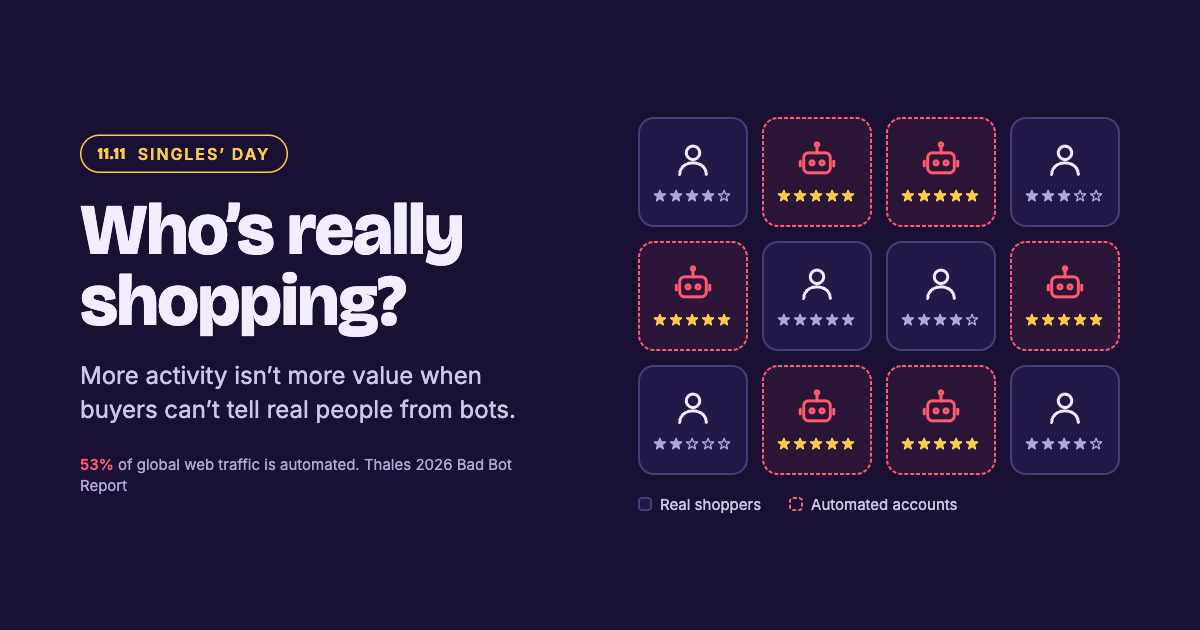
Singles' Day has grown into one of the world's largest shopping events. Last year's festival generated an estimated $237 billion in sales in China over five weeks.
At that scale, an increasingly important question for marketplaces is how much of the activity users see is authentic.
Thales' 2026 Bad Bot Report estimates that 53% of global web traffic is automated, with 40% of all traffic classified as malicious bots.
For marketplaces, the risks go beyond scraping and automated purchases.
Fake reviews can make inferior products look competitive. Coordinated accounts can manipulate ratings, flood listings, harass sellers, or redirect buyers off-platform.
A single review or message can look entirely legitimate. Patterns across an account's history, or a network of related accounts, often tell a different story.
At GGWP, we've been detecting spam and solicitation by analyzing user behavior over time. We've now deployed bot detection, including detection of coordinated bot networks, with the ability to take enforcement actions such as account removal when authorized by the platform.
There's also an interesting tension in platform incentives.
Automated accounts can inflate activity and engagement metrics. But that activity can undermine the trust that makes a marketplace valuable.
I suspect there's a tipping point. Users can tolerate some automated activity, especially when it serves a useful purpose. But when enough reviews, recommendations, or interactions seem artificial, people begin questioning even the genuine ones.
And enforcement should be different. With real people, we generally want to correct harmful behavior and preserve a path to participation. With malicious automated accounts, removal is often the appropriate response.
A marketplace can appear to be growing while the quality of participation deteriorates. More activity isn't necessarily more value, especially when users can no longer trust whom they're interacting with.


Quer se aprofundar usando seus próprios dados?
Boa parte do conteúdo destes posts é mais fácil de mostrar do que de explicar por escrito. Traga uma amostra dos seus dados e vamos analisá-la juntos, ao vivo.